
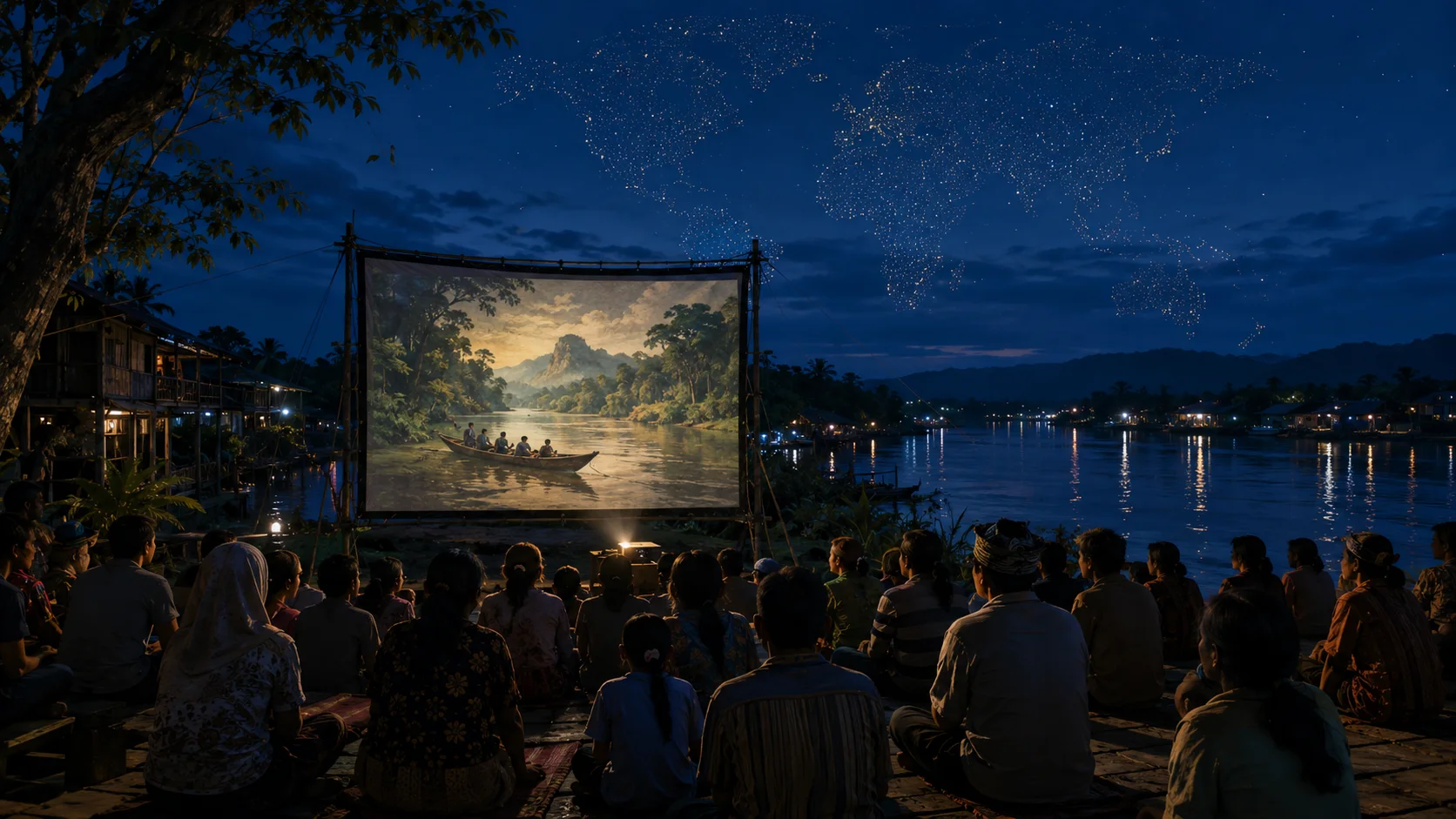
Whenever we talk about bringing local stories to a global stage, one concern often appears: “Will audiences elsewhere understand us?”
To reach international audiences, we do not need to remove local identity or make every story generic. Cultural specificity can be a work’s greatest strength.
“The world is full of stories that look alike. A work stands apart when it comes from somewhere real.
Rooted stories feel more believable
An audience may never have visited a longhouse, ridden a river taxi or travelled a river that serves as a community’s main route. They may not understand every custom, term or symbol.
They still understand love, loss, courage, friendship, family, betrayal and hope. These emotions are universal.
Culture gives those emotions a specific, convincing form. It shapes how people speak, show respect, face conflict, celebrate or carry grief. Honest detail makes a story feel alive; audiences need not share a character’s life to understand their feelings.
Specificity is not a barrier
Many internationally successful works do not hide where they come from. They invite audiences into unfamiliar worlds built clearly enough to reward curiosity.
A Borneo river is not simply beautiful scenery. It may be a highway, a source of life, a boundary between communities or a path into the unknown. The rainforest may provide livelihood and knowledge, command respect, or present a force beyond human control.
When place performs a function, it shapes character, conflict and narrative. The story no longer merely happens in Borneo—it can only happen because it was born from Borneo.
From Borneo to the world
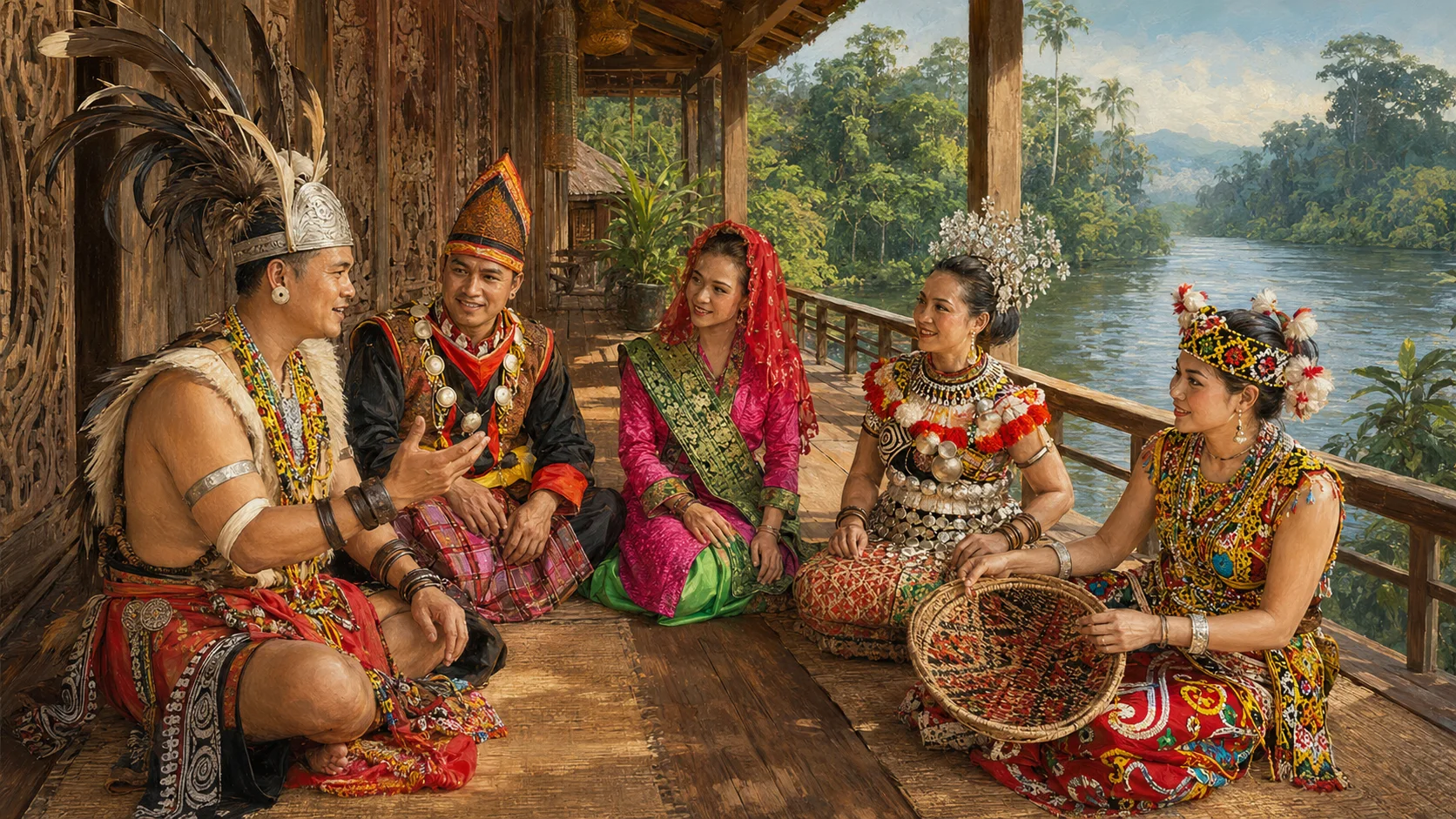
Sarawak, Sabah and Borneo hold cultures, languages, histories and landscapes seldom explored deeply on mainstream screens. This richness opens possibilities across family drama, comedy, adventure, history, fantasy, animation and games.
Cultural identity, however, is not visual decoration. It belongs in how characters think, relationships between generations, social structures, language, sound, music, architecture and the choices made throughout a story.
Not everything needs a long explanation. Culture can be understood through small actions—welcoming a guest, sharing food, asking permission or protecting family dignity. These details give a world its soul.
Balancing authenticity and accessibility
A local story should not be simplified until it loses its identity, but storytellers must offer an entry point for audiences unfamiliar with its culture. That entry may be a character, a clear conflict or an emotional journey.
Local terms can remain when context makes them understandable. Customs can be shown through action. History can live inside conflict instead of arriving as a lecture.
The aim is not to explain everything. It is to bring audiences close enough to understand while leaving them curious enough to explore.
Local stories do not need permission to become big
We can be too quick to assume stories from home are too small, specific or difficult for outsiders. Every global story began as someone’s local story.
Its scale comes not from erasing its origins, but from presenting emotion, character and conflict with strength.
At Keribang Studio, we believe stories from Borneo need not disguise themselves as stories from elsewhere. They need honest development, strong writing and production craft capable of drawing audiences into their world.
The clearer a story’s roots, the stronger its foundation to travel further.
Behind the process
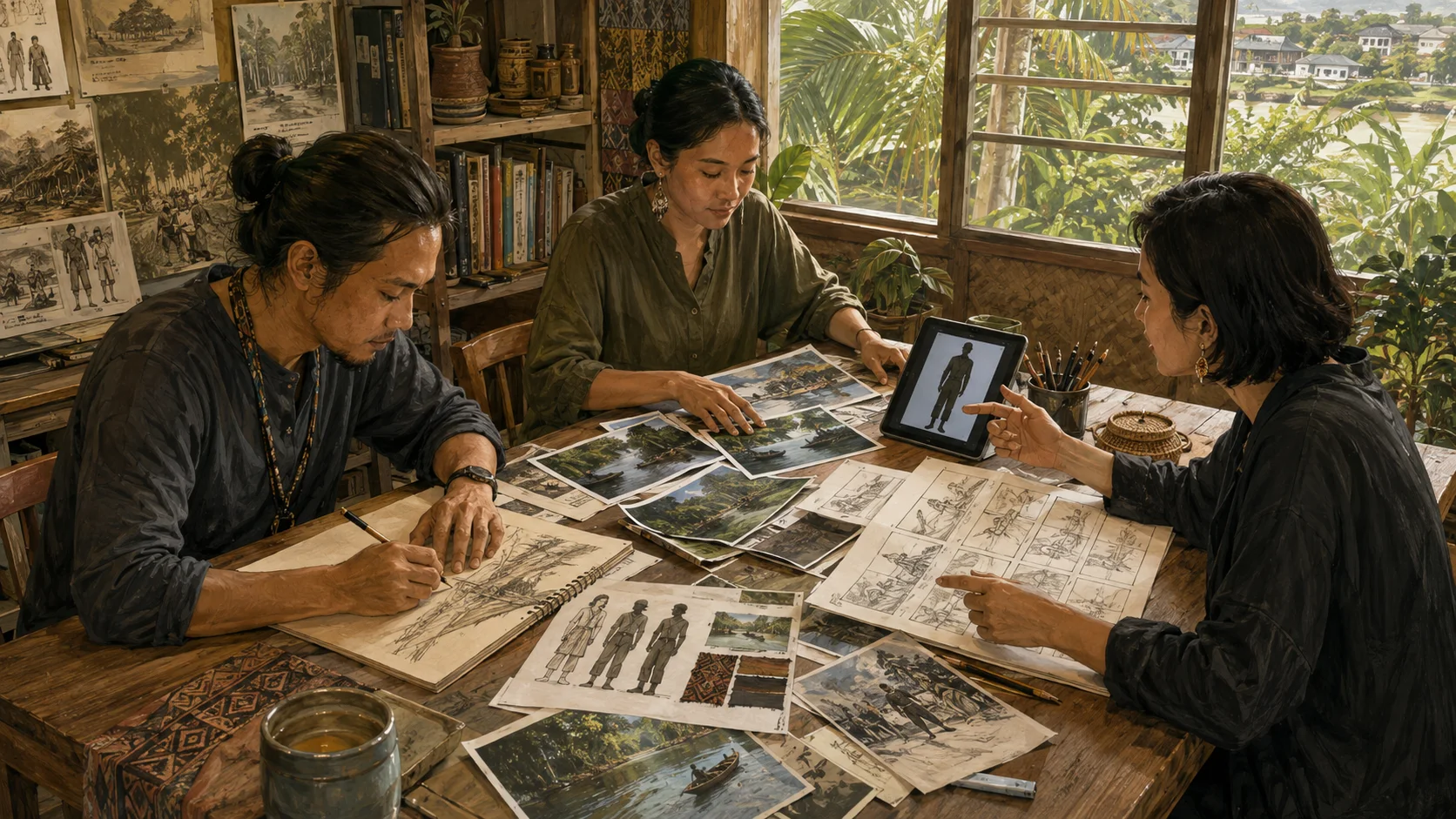
Every project begins with the right questions: what is the story’s core, which character will guide the audience, who is it for, and what visual form can bring it to life most honestly?
We find the central emotion and conflict before deciding production scale, then explore setting, culture, visual language and the right medium—film, animation, games or interactive experiences.
Beautiful visuals alone are not enough. Every design choice must serve the story. Research, discussion, sketches, experiments and refinement bring every decision back to one question: is this the most honest way to tell it?
The clearer a story’s roots, the further it can travel.