Every project begins with an idea. Sometimes it arrives as a character, a location, a personal experience or simply a question without an answer.
An idea alone, however, is not yet a story. Before the camera moves, the creative team must find its core: who are the characters, what do they want, and what conflict must they face?
“Before the camera moves, the story must first come alive in the imagination of the whole team.
Finding the heart of the story
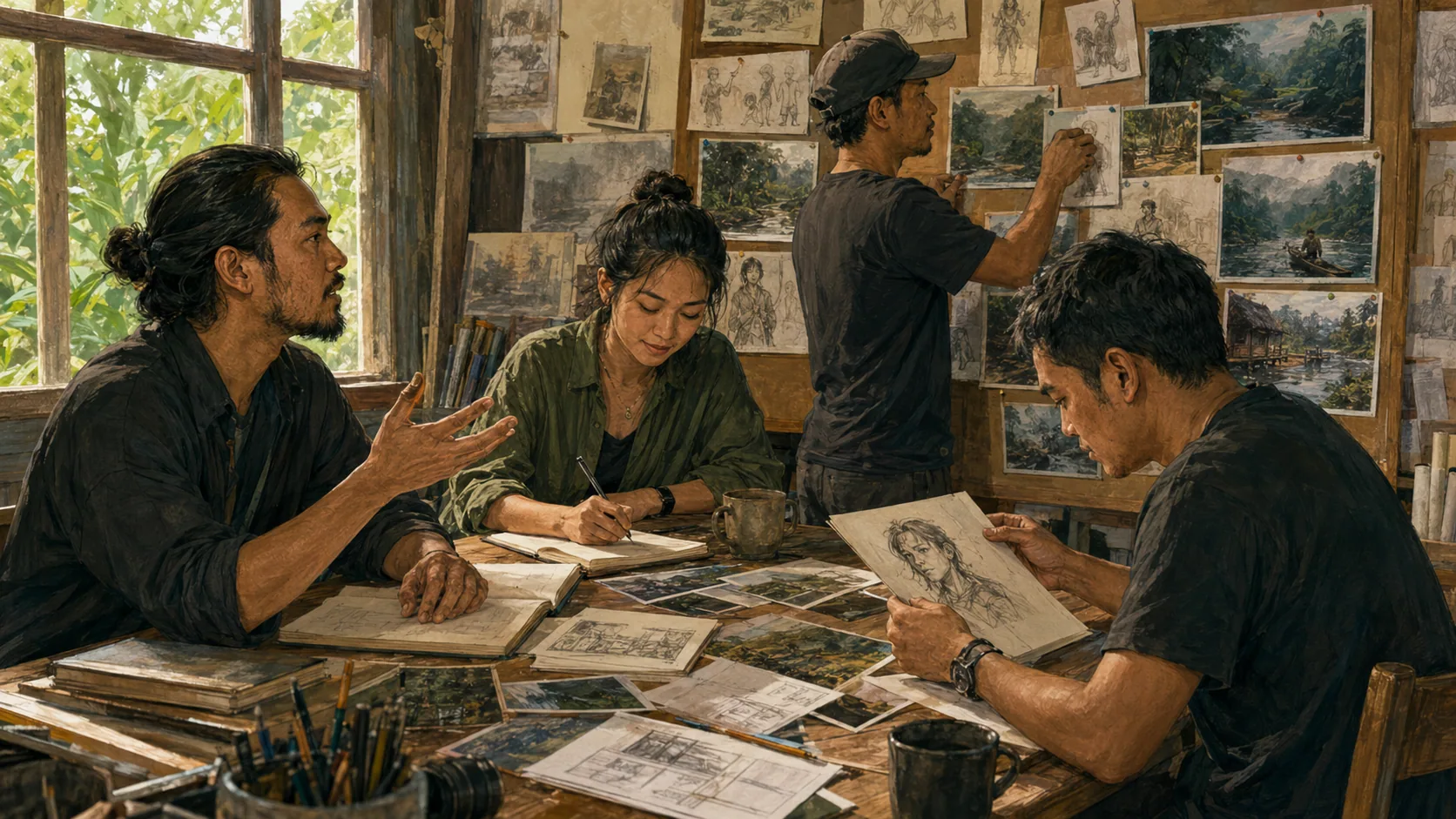
At the beginning, the team gathers ideas without deciding their final form too quickly. A conversation may start with lived experience, history, culture, a location or an issue close to the community.
Among these possibilities, we look for the central emotion that will connect the story with its audience.
Is this a story about family, loss, friendship, courage or the search for one’s place in the world?
Once its emotional core is clear, the characters, conflict and narrative journey become easier to define.
Building the world visually
Once the direction is established, the idea begins to take shape as a visual language.
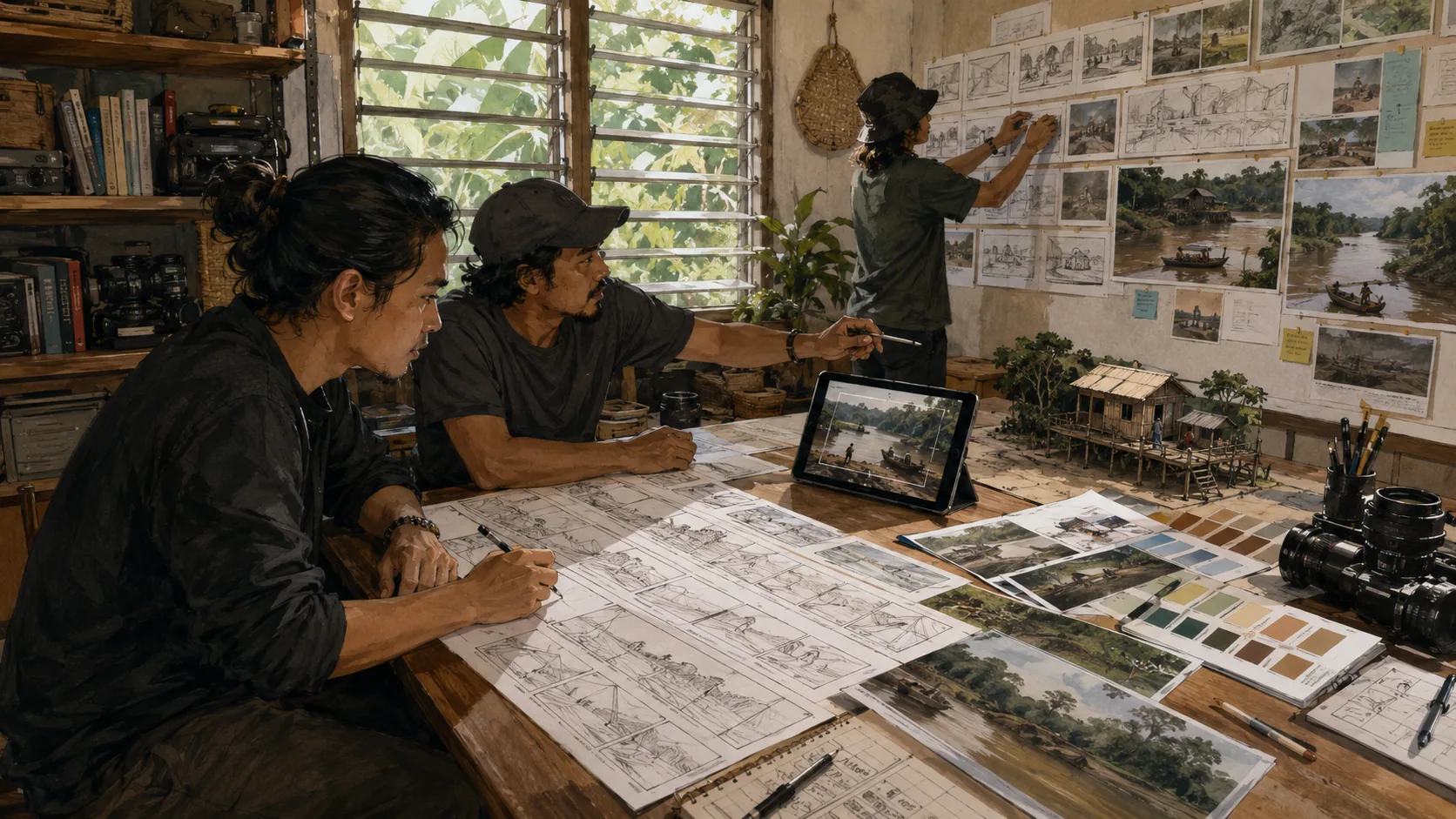
The team gathers reference photography and studies locations, clothing, architecture, colour and atmosphere. When a story draws from a particular culture, research must go deeper so that its visuals carry context and respect their source rather than merely looking beautiful.
From this research come character sketches, location concepts, mood boards and storyboards.
A storyboard lets us see how a scene will move—from character placement and camera angles to the emotional shift within each frame.
When the first frame is created
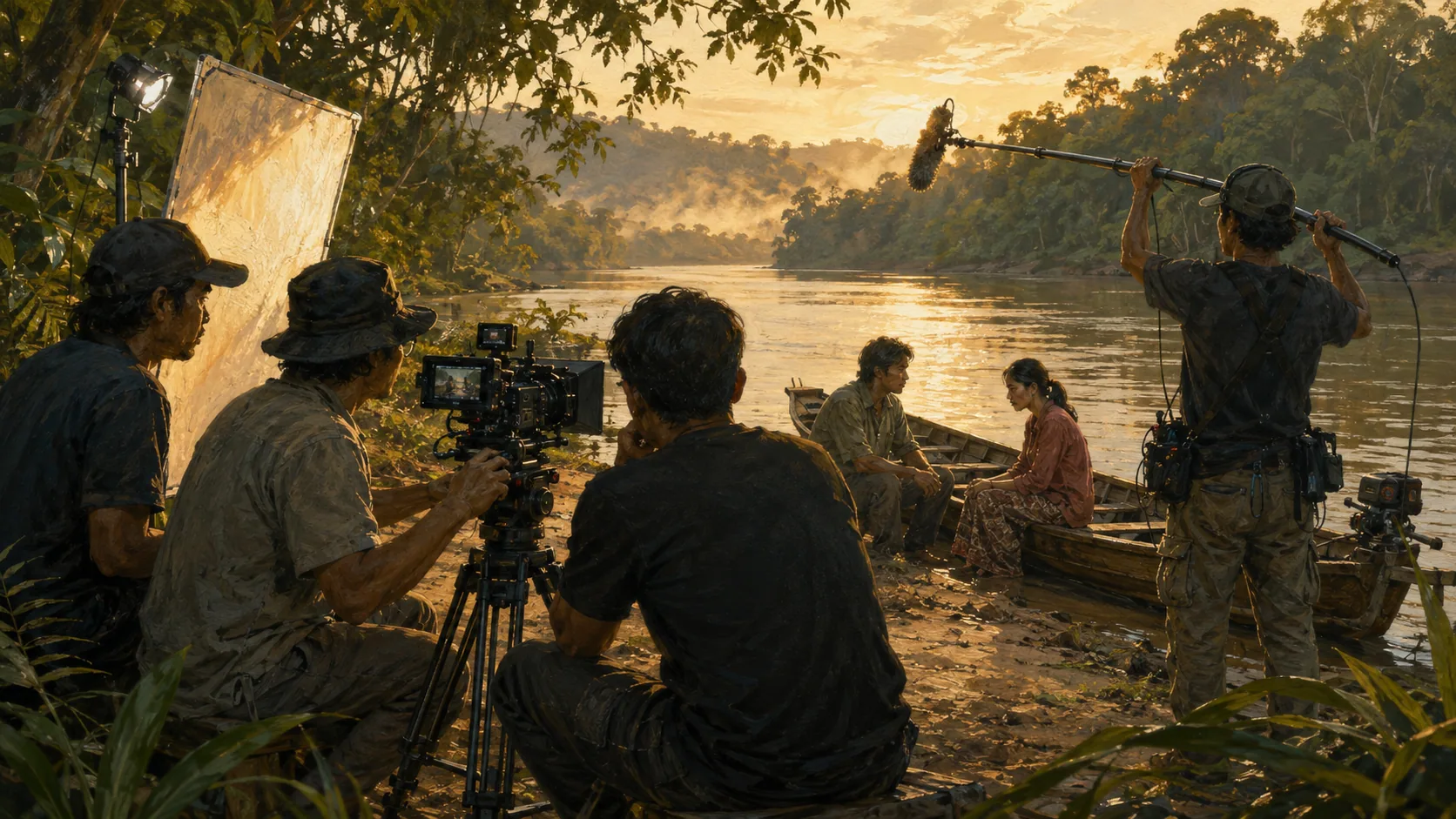
The first frame may last only a few seconds, yet behind it are many questions, choices, sketches and experiments.
It is where writing, directing, performance, cinematography, production design and the work of the entire crew meet.
When every element moves in the same direction, an idea that once existed only in the mind begins to become a world audiences can see and feel.
Behind the process
Every project begins with the right questions.
What is the heart of this story? Who is its audience? What visual form can carry it forward most honestly?
At Keribang Studio, we gather ideas, conduct research and build a visual language before production begins. Every choice—from colour and location to camera movement—must serve the story rather than merely look attractive.
Before the camera moves, the story must first come alive in the imagination of the whole team.